
New driveways, replacements and gravel conversions
Asphalt Driveway Paving in Portland, OR
The asphalt is the top few inches. The drainage and base under it decide how many winters it survives.
- Free on-site estimates
- Written quotes that state base depth and compacted asphalt thickness
- Oregon 811 locates requested before any digging or grading
A Driveway Built to Drain
Asphalt driveway paving around Portland starts below the surface. When a driveway here ruts in the wheel paths, breaks into alligator cracks or keeps growing potholes, the cause is almost always water in the base: rain that got in through open cracks, a low spot that holds a puddle for weeks, or an edge with nothing beside it to hold it up. With roughly 37 inches of precipitation a year at the airport, most of it between November and March, a new driveway has to be built so that water leaves quickly and the base stays strong when it is wet.
Signs it is time to replace
- Cracks joined into a web or alligator-skin pattern across large areas
- Ruts or dips that hold water after rain
- Potholes that return after patching
- Edges breaking off into the lawn or planting strip
- More patch than original surface
HomeGuide's guidance is a fair rule of thumb: replacement makes sense when cracking covers 60 to 70 percent or more of the surface, there are several potholes, drainage problems keep coming back, or the driveway is 20 to 30 years old. Below that, repair or an overlay is usually the better value, and we will tell you so.
Building the base
After the old surface comes out, we check the ground under it for areas that pump or move when loaded. Soft, organic or saturated soil is dug out and replaced with compacted crushed stone, then the base is built up and compacted in layers to the depth in your quote. HomeGuide describes a typical residential section as 2 to 3 inches of compacted asphalt over 6 to 8 inches of gravel base, and 3 to 4 inches over 8 to 10 inches for heavier vehicles. Driveways that see delivery trucks, a camper or a boat trailer get the heavier section.
Slope, crown and edges
We shape the surface with a crown or cross slope so rain sheets off to the sides instead of running down the middle, and we make sure the low end does not send water against the garage slab or the house. On West Hills and east-county lots with real grade, the driveway also has to be rolled carefully so the mat stays dense and does not shove. Edges are compacted, tapered and backfilled with soil so they are supported rather than hanging over air.
Gravel-to-asphalt conversions
Long gravel driveways are common on the edges of the metro. A gravel bed that is still thick and well drained can often become part of the new base, which helps the budget. We check how much stone is left, how much has been pushed into the soil, and whether the grade works, then regrade, add stone where needed and pave.
The apron and the permit
In Portland, installing or changing a driveway always requires a permit, and the apron crossing the sidewalk is in the public right-of-way. Repaving within the same footprint is a different job from adding, widening or moving a driveway, and we confirm which rules apply before scheduling.
After paving
HomeGuide advises staying off new asphalt for 24 to 48 hours, 3 to 5 days in hot weather, and keeping heavy vehicles off for at least a week. Avoid turning the wheel while parked, put a board under kickstands and trailer jacks, and plan on a sealcoat once the asphalt has cured.
What a Driveway Job Covers
From pulling out the old surface to the last tapered edge.
Tear-out and haul-off
Old asphalt, concrete or worn gravel removed and hauled away.
Subgrade repair
Soft, wet or organic soil dug out and replaced with compacted stone.
Stone base
Crushed stone graded for drainage and compacted to the depth in your quote.
Hot-mix asphalt
Placed and rolled to the stated compacted thickness, heavier where trucks or trailers park.
Edges, apron and transitions
Supported, tapered edges and clean joints at the garage, walks and street apron.
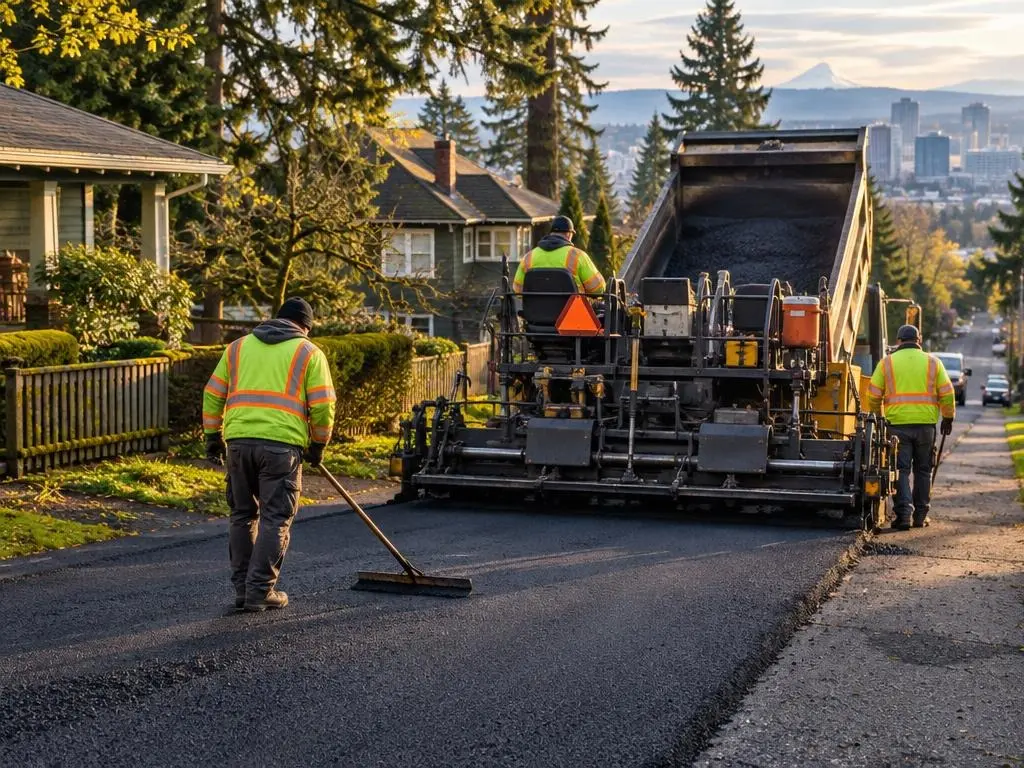
Typical Asphalt Driveway Costs
| Item | Published national range |
|---|---|
| New asphalt driveway (HomeGuide) | $5 to $12+ per sq ft |
| New asphalt driveway (Angi) | $7 to $15 per sq ft |
| 400 sq ft driveway (HomeGuide) | $2,000 to $4,800 |
| 600 sq ft driveway (HomeGuide) | $3,000 to $7,200 |
| 1,000 sq ft driveway (HomeGuide) | $5,000 to $12,000 |
| Remove and replace (Angi) | $8 to $15 per sq ft |
| Site prep and grading (Angi) | $1 to $2 per sq ft |
National ranges from published cost guides; each builds its numbers differently. Portland-area prices can differ, and access, slope, base repair and removal move the total. Your written estimate is the price. HomeGuide notes some contractors set a minimum charge of $2,000 or more.
How It Works
1. Site visit
We measure, check slope and drainage, probe soft areas and note where the driveway meets the street.
2. Written quote
Removal, base repair allowance, base depth and asphalt thickness itemized with prices.
3. Locates and permits
Oregon 811 locates requested; City, county or ODOT permits handled where the job needs them.
4. Base work
Old surface removed, soft soil replaced, stone base graded and compacted.
5. Paving
Hot mix placed and rolled on a dry day, edges finished, care instructions given.
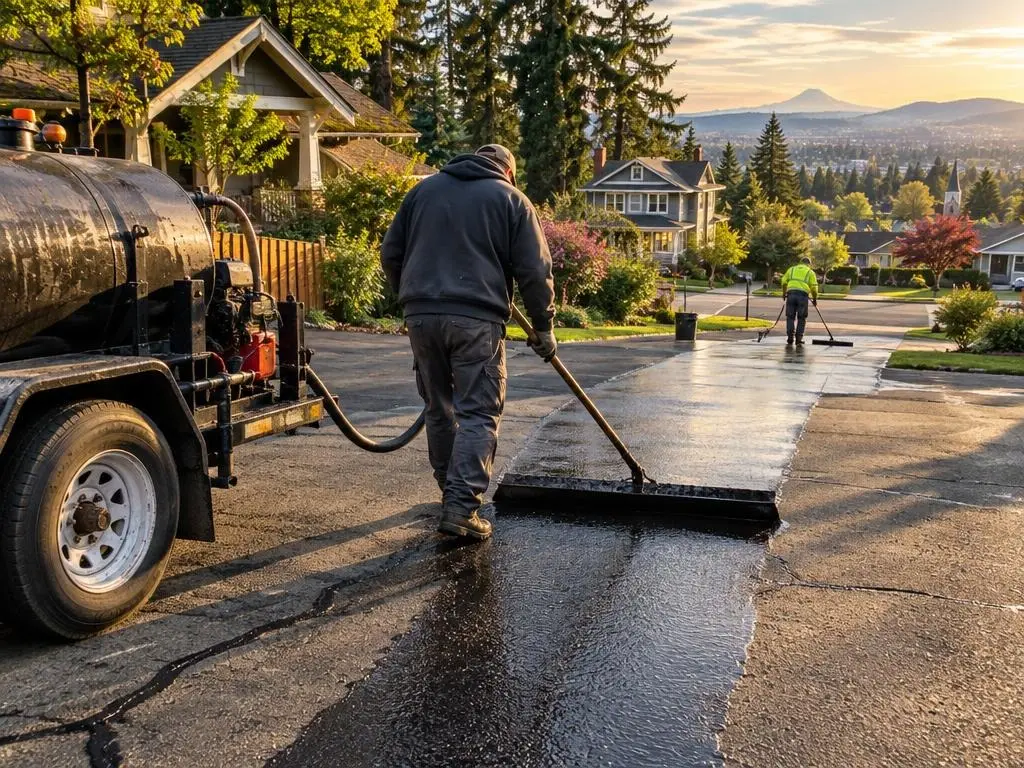
Asphalt Driveway Paving Questions
What does a new asphalt driveway cost around Portland?
National guides list about $5 to $12 or more per square foot (HomeGuide) and $7 to $15 (Angi). A 600-square-foot driveway lands around $3,000 to $7,200 in HomeGuide figures. Tear-out, base repair, slope and length change the total; we price yours in writing after seeing it.
How thick should my driveway be?
A common residential section is 2 to 3 inches of compacted asphalt over 6 to 8 inches of stone. If you park trucks, trailers or an RV, plan on 3 to 4 inches over 8 to 10 inches. On wet ground, the base depth matters as much as the asphalt.
Do I need a permit to repave my driveway in Portland?
Installing or changing a driveway always requires a City permit, including work on the apron in the right-of-way. Repaving the same driveway without changing it is a different case, and voluntary driveway repairs have their own permit. We check your address and scope before scheduling.
Asphalt or concrete for a Portland driveway?
Both work. Asphalt usually costs less up front and is easy to patch or overlay, but it needs sealing every few years. Concrete costs more and lasts longer, but repairs are harder to blend in. Budget, slope and how long you plan to stay all factor in.
Asphalt Driveway Paving Service Areas
- Asphalt Paving in Portland, OR
- Asphalt Paving in Vancouver, WA
- Asphalt Paving in Gresham, OR
- Asphalt Paving in Hillsboro, OR
- Asphalt Paving in Beaverton, OR
- Asphalt Paving in Tigard, OR
- Asphalt Paving in Lake Oswego, OR
- Asphalt Paving in Milwaukie, OR
- Asphalt Paving in Oregon City, OR
- Asphalt Paving in Tualatin, OR
- Asphalt Paving in West Linn, OR
- Asphalt Paving in Happy Valley, OR
- Asphalt Paving in Wilsonville, OR
- Asphalt Paving in Troutdale, OR
- Asphalt Paving in Sherwood, OR
- Asphalt Paving in Camas, WA
- Asphalt Paving in Washougal, WA
- Asphalt Paving in Fairview, OR
- Asphalt Paving in Gladstone, OR
- Asphalt Paving in Wood Village, OR
- Asphalt Paving in Clackamas, OR
- Asphalt Paving in Oak Grove, OR
- Asphalt Paving in Aloha, OR
- Asphalt Paving in Cedar Mill, OR
- Asphalt Paving in Forest Grove, OR
- Asphalt Paving in Sandy, OR
Get an Asphalt Driveway Paving Estimate
Free estimates for new and replacement driveways around Portland.